Heat travels through a plate.
+ Established circuit. Broad supplier ecosystem.
− Indirect thermal contact; seals and plate contact need attention.
Direct cooling. Stronger thermal control. Better lifecycle potential. Discover what dielectric immersion can bring to your next BESS investment.
+ Established circuit. Broad supplier ecosystem.
− Indirect thermal contact; seals and plate contact need attention.
+ Direct heat pickup. Broad contact supports thermal uniformity.
− Fluid compatibility, circulation and condition must be managed.
AI-generated concept renderings; illustrative architecture, not product photographs.
| Design decision | Traditional liquid cooling | ROCAS dielectric immersion |
|---|---|---|
| Heat transfer | Cell → interface → plate → coolant. | Cell surface → dielectric fluid. |
| Temperature uniformity | Depends on plate contact and flow distribution. | Broad fluid contact supports more uniform temperatures. |
| Hot spots | Heat must travel to the cooled contact area. | Direct heat pickup helps manage local hot spots. |
| Electrical insulation | Coolant stays inside a sealed plate circuit. | Electrically insulating fluid surrounds the cells. |
| Fire protection | Plate heat removal plus BMS and system protection. | Direct heat absorption can help limit propagation. |
| Service requirements | Coolant, pumps, seals, circuit integrity and plate contact. | Fluid condition, compatible seals, circulation and gas management. |
Look beyond the purchase price. Compare capital over the operating life.
EUR / MWh
+17.6%Equivalent full cycles
+71.4%EUR / initial MWh / EFC
−31.4%Illustrative assumptions, not guaranteed product performance. CAPEX / EFC: 170,000 / 7,000 = 24.29; 200,000 / 12,000 = 16.67. Comparable qualification and equal scope assumed. Excludes energy, losses, OPEX, augmentation and discounting; this is not full LCOS. Actual life depends on duty cycle, calendar ageing and end-of-life criteria.
Video hosted on Google Drive. Open video in a new tab ↗
A fire can damage assets, stop dispatch and disrupt the site. Evaluate protection before you buy.
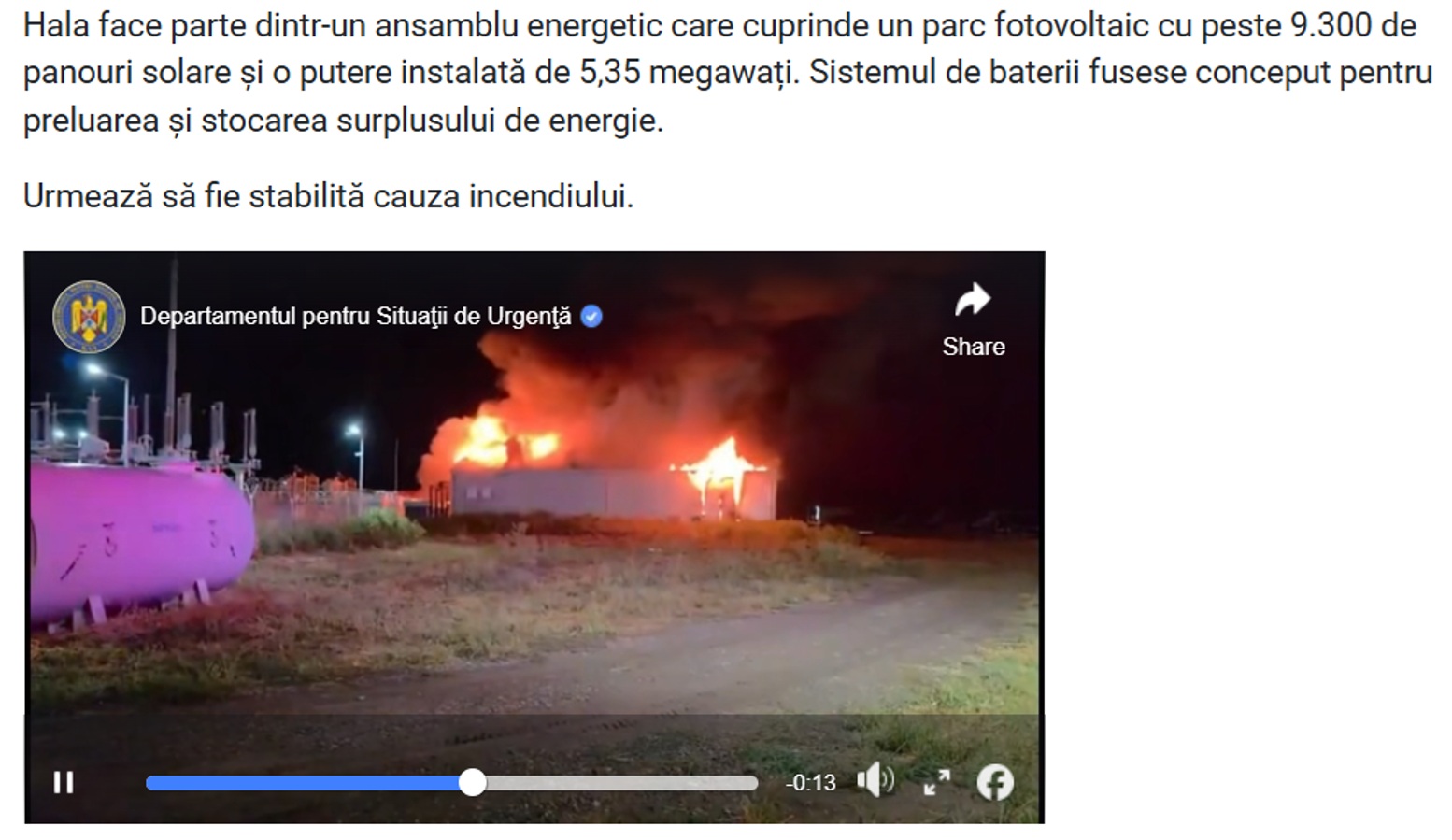
A battery-storage hall fire required a difficult, prolonged intervention. IGSU did not establish the cause in this release.
Incident report ↗DSU / IGSU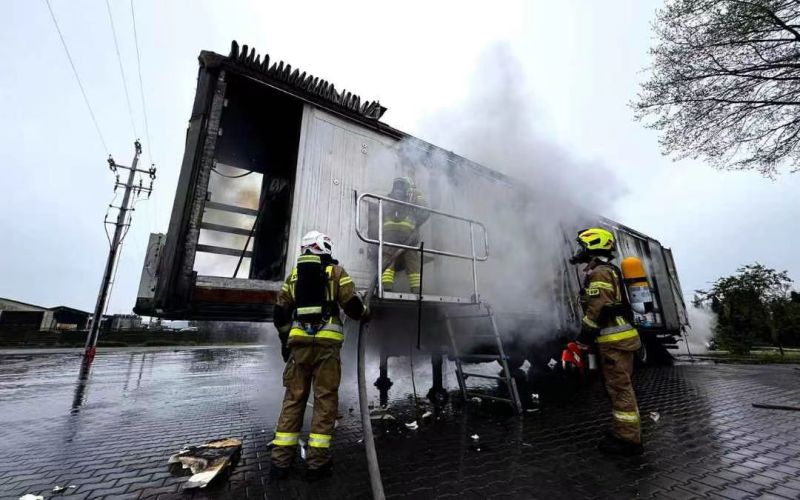
A container battery fire prompted continued cooling, thermal monitoring and evacuation of nearby people.
Incident report ↗PSP Poznań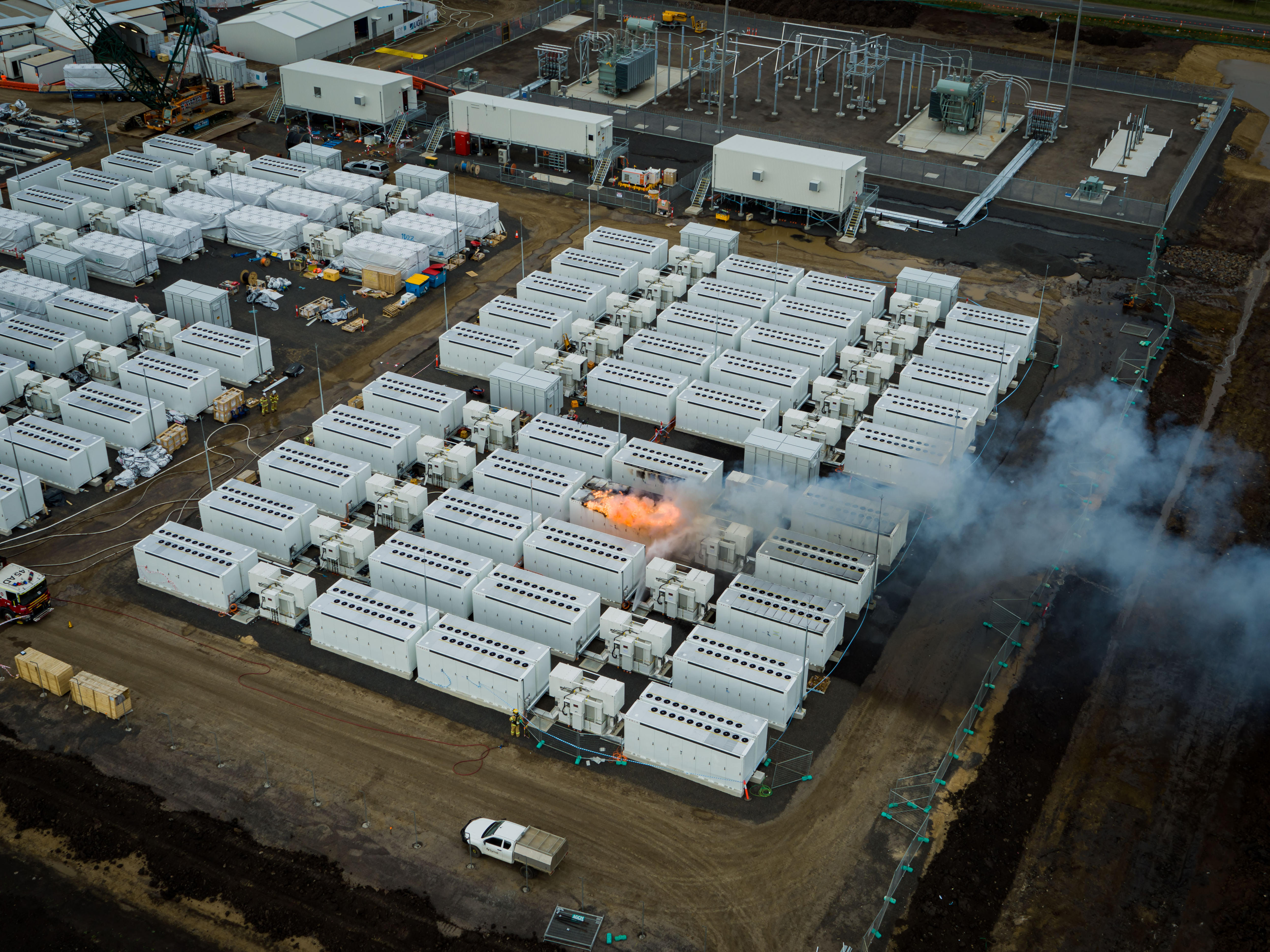
Fire spread to a neighbouring Megapack during commissioning. Investigators identified a probable coolant leak and electrical faults.
Incident report ↗FRV / ABC; FEI / ESRGReal incidents illustrate BESS fire exposure, not a controlled comparison of cooling methods. Cooling configurations at Stâlpu and Czajków are not established here. Immersion does not guarantee zero fire risk. Images and credits from the supplied ROCAS safety presentation.
Direct fluid contact helps remove heat and manage hot spots.
Combine immersion with BMS, detection, gas management and fire protection.
Select tested configurations, documented operating limits and a defined maintenance plan.

Discuss the right architecture for your power, capacity and operating strategy.